The Family Card is a major social welfare proposal designed to support families struggling with rising costs, bringing all government assistance under one organized system. The registration process will officially start on March 10, 2026. Prime Minister Tarique Rahman will inaugurate the programme at Sadar Upazila of Bogura. A total of 40,000 families will receive Family Cards in the first phase.
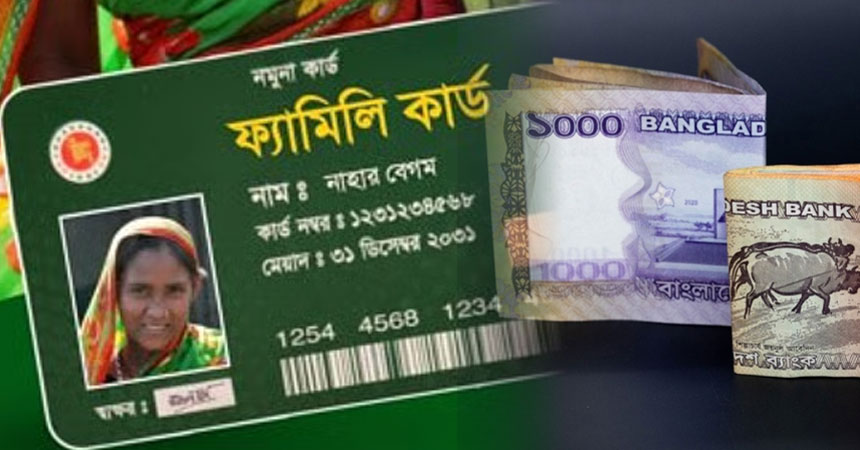
The Family Card is a major social welfare proposal announced by the Bangladesh Nationalist Party (BNP). It has quickly become one of the most discussed public initiatives in the country, designed to support families who are struggling with financial hardship.
Instead of many small, separate programs, this plan aims to bring all help under one organized system. Every eligible family will receive support regularly through a card registered in their name.
This card acts as proof that the family qualifies for government assistance. It ensures that the benefits reach the right people without interference from middlemen.
A modern, digital solution for social security.
Each card has a unique QR code for instant digital verification at any service point.
Strictly linked with the National ID database to prevent duplicate or ghost beneficiaries.
Option to link with bKash/Nagad for direct cash transfers to families.
Priority access to subsidized goods at TCB fair-price outlets across the country.
From application to receiving your monthly support.
Data is collected from households including income levels, number of family members, and employment status.
Verified families receive their physical Family Card, primarily registered to the female head of the house.
Families use the card to withdraw cash or buy essential commodities at half-price from designated centers.
To ensure transparency and a corruption-free system, the government is implementing the registration process in four distinct stages.
The dedicated subcommittee will submit its final outline by next Tuesday. This report will define the specific allowance amounts and established policy guidelines for all citizens.
Launching before Eid, a pilot project will create an official Beneficiary List. Local administration and public representatives will identify and list truly needy families to ensure aid is targeted correctly.
Starting with successful models in Shibchar, Madaripur, the program will expand to every upazila and ward. During this stage, application forms can be collected directly from the offices of Members or Councillors.
For maximum transparency, applications will eventually be accepted through a digital portal using NID. For now, visiting your Union Parishad or Municipality office is the best way to start.
Why this program is a landmark for social security.
Monthly cash assistance of Tk 2,000 to Tk 2,500 deposited directly to the card holder.
Cards are primarily issued in the name of the female head of the household to ensure effective management.
Equipped with scannable barcodes and integrated with NID data to prevent corruption and leakage.
The ultimate vision of the Family Card program is to provide a safety net for nearly 10 crore (100 million) people across Bangladesh.
Find detailed answers to all your questions below.
The program is designed to be inclusive but prioritizes those in most need.
1. Primary Target: Ultra-poor and poor families who do not have a steady high income.
2. Secondary Target: Lower-middle and middle-class families struggling with inflation.
3. Exclusion: Government employees with high salaries or individuals owning significant luxury assets may be excluded to ensure aid reaches the needy.
The benefit is categorized based on household needs:
• Cash Aid: A monthly allowance of Tk 2,000 to Tk 2,500 will be transferred to the card holder.
• Commodity Aid: In some phases, families can use the card to purchase essential food items (rice, pulse, oil, sugar) at 50% lower prices compared to the open market through TCB centers.
The BNP initiative places the female head of the household at the center for two reasons:
1. Effective Management: Research shows that women are more likely to spend welfare funds on family nutrition and children's education.
2. Empowerment: It gives housewives a sense of financial security and a recognized role in government social safety nets.
Since the card is integrated with your National ID (NID), your data is safe in the central database.
If lost, you must report it to your local Union Parishad or Municipality office. After verification of your NID, a replacement card will be issued with a small processing fee. Your previous balance or eligibility will remain intact.
No. The policy follows a "One Household, One Card" rule.
The system uses scannable barcodes and NID cross-referencing to ensure that no single household can register twice. This ensures the limited resources are shared fairly among the maximum number of families.
The program is currently in the Pilot Phase.
It is starting in 8 selected upazilas across the country to test the digital infrastructure. Once the testing is successful and the database is refined, the program will be rolled out to all 64 districts in a phased manner.
Once you apply, you can check your status in two ways:
1. Online Portal: Visit the official Family Card web portal and enter your NID number.
2. SMS Service: Send a specifically formatted SMS (details will be provided during registration) to receive an instant update on your approval status.